
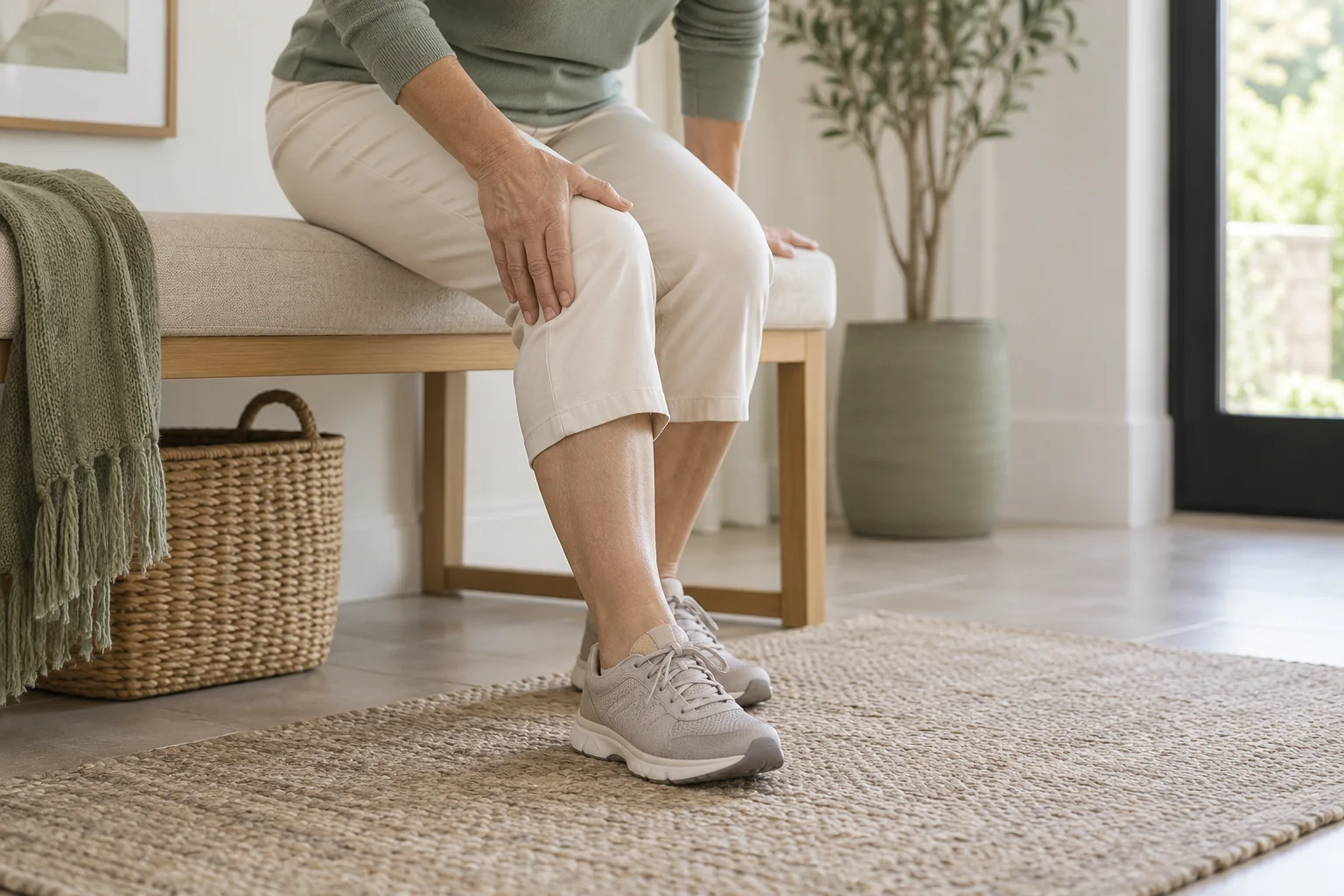
What you may feel
- Pain may be felt at the front, sides or back of the knee.
- Walking, stairs, squatting or rising from a chair may hurt.
- Swelling, tightness or stiffness after rest may occur.
- Fully bending or straightening the knee may become difficult.
- Report locking, giving way or painful clicking to the clinician.
How it is assessed
Assessment considers injury mechanism, walking, swelling, range of motion and stability. Tests are selected according to the examination.
Explain how far you can walk, which footwear you use and which movements hurt. Mention recent injury or changes in activity.
Approaches to care
Care may include activity modification, rebuilding strength and movement, and individual pain management. Procedures depend on the diagnosis.
Discuss realistic walking, work or exercise goals with your clinician. At follow-up, describe changes after activity and how long pain lasted.
When to seek urgent help
Inability to bear weight after injury, a hot red joint with fever, or a suddenly cold pale foot need urgent assessment.
Further reading: NHS
This is educational information and does not replace an individual medical assessment. Similar symptoms alone do not establish a diagnosis.